AMD Radeon HD 7770 Buyer's Guide
Positioning and generation
The AMD Radeon HD 7770 is a desktop graphics card built on the GCN 1.0 architecture. On our site it sits in the Legacy / Budget tier band. By today's standards its performance trails well behind current mainstream cards, so it suits light games, older titles and small independent releases rather than the latest big-budget graphics.
In our requirements database, a fair number of games list this card's level as their official minimum. Most newer games, however, have official recommended requirements well above what it can offer. In short, it is a card that will run some games, but you need to keep your expectations modest.
If you have an older PC you want to bring back to gaming, or you are on a tight budget, this card can be a practical choice. If your budget allows, stepping up to a newer generation will give a much better experience.
Key specs explained
The specifications we hold for this card are: AMD as the vendor, Radeon HD 7770 as the model, GCN 1.0 as the architecture, desktop as the form factor, and 1 GB of video memory. It does not support ray tracing or DLSS. Other specifications are not listed in our data.
The 1 GB of VRAM is the biggest limitation. Modern games use larger textures that need more video memory. When capacity runs short, a game may have to lower texture quality, load textures slowly, or stutter. When choosing games, pay close attention to the official VRAM requirement.
The lack of ray tracing and DLSS support means the card cannot use hardware-accelerated lighting effects or AI upscaling to recover performance. For newer games that depend on these features, you will have to rely on lower graphics settings to get a playable picture.
Suitable games and resolutions
Based on our calculation against official requirements, of the 439 games with published requirements, this card falls short of the official minimum in 295 cases, meets only the minimum in 66, reaches the recommended level in 31, and sits well above the recommended level in 27. Most recent large games are therefore outside its comfortable range, while lighter titles have a better chance of running smoothly.
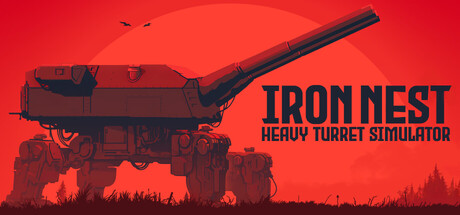
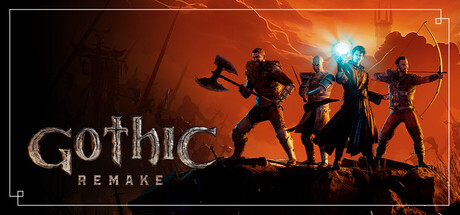
Games that suit it include pixel-art and 2D titles such as Balatro, Brotato, Vampire Survivors and Peglin, along with lighter games like Trombone Champ and POPGOES Arcade. Titles such as Hades II and Hollow Knight: Silksong roughly meet only the minimum, so you will need to drop graphics settings to low.
For resolution, 1080p is the sensible target. Above that, you will hit the limits of video memory and performance sooner. For lighter games, lowering the resolution is an acceptable approach.
Compared with similar hardware
In our ranking, cards placed slightly higher in the same general band include the AMD Radeon HD 6850, NVIDIA GeForce GTX 650 and AMD Radeon HD 5850. Cards at the same level or slightly below include the NVIDIA GeForce GTX 260, the integrated Intel UHD Graphics 770 and the AMD Radeon HD 7750.
These comparisons only show rough positioning and do not represent precise performance gaps. If you are choosing within this price range, check the official requirements of the games you plan to play first, then see which card fits them better. The integrated Intel UHD Graphics 770 can serve as a stand-in for some light games, though results depend on the title.
Buying new or used
If buying new, confirm that your power supply has enough wattage and the right connectors, and check that your case has room for the card's length and cooler. Cards of this generation draw modest power, so a typical mid-range supply should cope, but check whether any extra power connector is needed.
If buying used, the main concern is whether the card was used for cryptocurrency mining. Long periods at high load wear out fans and thermal paste, which affects cooling and stability. Ask the seller for a video of the card booting and running under load, and check the fans for noise and the board for signs of burn damage.
New cards usually come with a manufacturer warranty, while used cards rarely do, so the price should reflect that risk. If the seller will not offer a return option or a chance to test the card, proceed with caution.
Upgrade advice
If this card no longer feels adequate, upgrading makes sense. Among the upgrade targets in our data, the NVIDIA GeForce GTX 650 Ti is clearly positioned higher and is a reasonable step up at a similar price. The AMD Radeon HD 5870 and AMD Radeon HD 6950 are a tier higher again and can handle the minimum requirements of more games.
When upgrading, also look at the CPU and memory. An old processor can limit the gain from a better graphics card, and too little RAM can cause stutter while games load. Keeping the graphics card balanced with the rest of the system ensures the money spent on the upgrade pays off.