AMD Radeon RX 6950 XT Buyer's Guide
Positioning and generation
The AMD Radeon RX 6950 XT is a desktop graphics card built on AMD's RDNA 2 architecture. On FrameScope's hardware ranking it sits in the High-End Gaming band. It is no longer the newest card on the market, but it remains a capable high-end choice for mainstream modern games, and its 16 GB of memory is generous for its class.
Compared with similar NVIDIA cards, its performance position is close. The main differences lie in feature support and ecosystem. If the games you play support AMD's technologies well, it is a dependable choice. If ray tracing or AI-based upscaling matters a lot to you, read the spec section below carefully before deciding.
Key specs explained
This card carries 16 GB of GDDR6 video memory on a 256-bit memory bus. Video memory capacity determines how much texture and scene data the card can hold at once, which helps most at high resolutions and high texture settings. The 256-bit bus governs how quickly that data can move. Taken together, the memory setup is solid.
On features, it supports ray tracing and AMD's FSR upscaling, and it offers frame generation. FSR renders at a lower internal resolution and scales the image up, trading some sharpness for extra headroom, which suits players who want smoother play at higher resolutions. The card does not support NVIDIA's DLSS, so in games that only offer DLSS you will not have that upscaling option.
Suitable games and resolutions
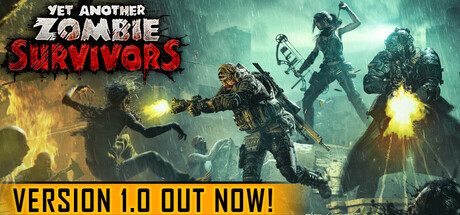
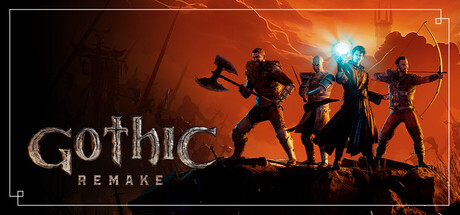
Of the 439 catalogue games with published system requirements, this card can be matched against 419 of them. Fifty-six of those games sit at the official recommended level, and 363 are well above the recommended requirements, which means most titles are not a strain for it. Example games in the comparison include Yet Another Zombie Survivors, Gothic 1 Remake, Windrose, Super Battle Golf, Mewgenics, Rhythm Doctor, VEIN and Deep Rock Galactic: Survivor.
For resolution, 1080p remains the most practical target, and the card clears the official recommended level in the large majority of games there. At 1440p it is usually a capable choice too, though this depends on the game and the settings you want. 4K is possible in some titles, but for the newest demanding releases, plan on using upscaling to keep the load manageable.
Compared with similar hardware
On FrameScope's ranking, the nearest cards above it are the NVIDIA GeForce RTX 3090 Ti, the AMD Radeon RX 7800 XT and the NVIDIA GeForce RTX 4080 Laptop GPU, which is a laptop part. The RX 7800 XT is a newer generation, so it is worth weighing if you are shopping for a desktop.
The nearest cards below it are the NVIDIA GeForce RTX 4070, the NVIDIA GeForce RTX 3090 and the NVIDIA GeForce RTX 5060 Ti 16GB. These sit close in ranking position, so when comparing, focus on price, feature support such as ray tracing and upscaling, and the types of games you play most. This comparison is based only on ranking position and naming, not on measured results.
Buying new or used
High-end cards like this are usually large, so check your case's clearance and airflow before buying. Make sure your power supply has enough capacity and the correct connectors for the card, and confirm the cable adapters are matched to the card's power needs.
If you are considering a used card, pay attention to its history. Cards that were used for mining may show wear on fans and heatsinks, so check that the fans spin normally and that the heatsink and backplate are not heavily dusted. New cards usually come with manufacturer warranty, while used cards often do not, so confirm the seller's return terms and, where possible, test the card before paying.
Upgrade advice
If your current card can no longer reach the official recommended level in most games, or you want a steadier experience at 1440p and above, upgrading is a sensible step. Before buying, also review your processor and memory so the whole system stays balanced and the new card's power is not held back.
If you do upgrade, the cards to consider are the NVIDIA GeForce RTX 5070, the AMD Radeon RX 9070 and the NVIDIA GeForce RTX 4070 Ti Super. In FrameScope's ranking, each sits clearly above the RX 6950 XT and belongs to the same or a newer generation, so they are the logical targets to compare on price and features.