NVIDIA GeForce RTX 2060 6GB Buyer's Guide
Positioning and generation
The NVIDIA GeForce RTX 2060 6GB is a desktop graphics card from the Turing generation. In the FrameScope hierarchy it sits in the Entry Gaming tier. That tier is aimed at players who want to run most mainstream games on a modest budget, rather than chasing maximum settings or very high refresh rates.
The card supports ray tracing, DLSS and FSR. At this level ray tracing is usually best treated as an optional extra. Upscalers like DLSS and FSR are the more useful feature, since they let you render at a lower internal resolution for smoother play without a large loss in image quality.
If your goal is smooth 1080p gaming without spending heavily, this card's position fits that need well.
Key specs explained
This card has 6 GB of GDDR6 video memory on a 192-bit memory bus. For 1080p gaming, 6 GB is generally enough, but in newer large games with high-resolution textures the memory can fill up quickly, which shows up as texture pop-in or stutter. The 192-bit bus gives it more bandwidth headroom than narrower entry-level cards.
Ray tracing and DLSS or FSR support are where the card gets practical value. Upscaling is especially helpful in this tier, because it can raise smoothness without a major sacrifice in visual quality.
Our database does not list other specifications such as clock speeds, cache size or power draw, so a deeper comparison on those points is not possible here.
Suitable games and resolutions
Measured against official requirements, this card resolves 419 of the 439 games in our catalogue. Of those, 233 are well above the recommended tier, 87 meet the recommended requirements, 90 meet only the minimum, and 9 fall below the minimum and may not run properly.
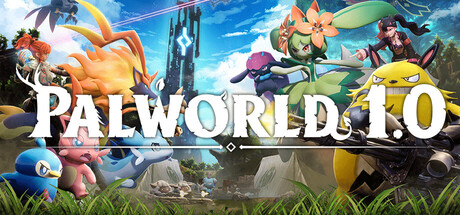
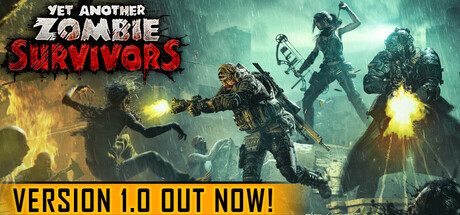
Games that meet the recommended requirements include Yet Another Zombie Survivors, Paralives, Forza Horizon 6, Librarian: Tidy Up the Arcane Library!, Far Far West, shapez 2 - Factory, Super Battle Golf and Mewgenics. Titles that only clear the minimum include Big Ambitions, Fields of Mistria, Big Walk, Scrap Mechanic, DragonSword : Awakening and Palworld. Titles below the minimum include Gothic 1 Remake, Windrose, METAL GEAR SOLID Δ: SNAKE EATER, DOOM: The Dark Ages, Indiana Jones and the Great Circle and Bellwright.
Overall, 1080p is the sensible target resolution. Higher resolutions add considerable load, so rely on DLSS or FSR rather than native resolution alone.
Compared with similar hardware
One tier above sit the AMD Radeon RX 5700, the AMD Radeon RX Vega 64 and the NVIDIA GeForce RTX 2060 12GB. The 12GB version shares this card's GPU family, and its main difference is memory capacity, which gives it more room in games that use a lot of video memory.
One tier below sit the NVIDIA GeForce GTX 1080, the Intel Arc A580 and the AMD Radeon RX Vega 56. These are close in tier, so if prices are similar, choose based on the features you care about, such as ray tracing or a particular upscaler.
These comparisons are based only on tier position. Your real choice should depend on the games you play and your budget.
Buying new or used
Before buying, check that your power supply has enough wattage and the right connectors, and that your case has room for the card's length and cooler. This card is in a modest power class, so most mid-range power supplies can handle it, but a reputable unit is still recommended.
If you consider a used card, ask whether it was used for mining. Long periods at full load wear out fans and thermal paste and can affect stability. When buying used, ask the seller for a video of the card running, and check that the fans spin smoothly and make no unusual noise.
New cards usually come with a full warranty, which gives more peace of mind if your budget allows. With used cards, confirm whether the warranty has expired or can be transferred.
Upgrade advice
An upgrade makes most sense when the current card can no longer keep up with the games you want to play. In our ranking, the upgrade targets worth considering are the AMD Radeon RX 6600 XT, the Intel Arc B570 and the NVIDIA GeForce RTX 3060 12GB. All three sit clearly higher in tier and belong to the same or a newer generation.
When upgrading the graphics card, also consider the processor and memory. An older processor or too little RAM can limit the gains from a better card. Aim to keep the graphics card, processor and memory reasonably balanced so that no single part becomes an obvious bottleneck.