NVIDIA GeForce GTX 1080 Buyer's Guide
Positioning and generation
The GeForce GTX 1080 is a desktop graphics card from NVIDIA's Pascal generation, and it currently sits in the Entry Gaming tier band. It was built to run most games smoothly at typical gaming settings, not to meet the demands of the newest high-end titles.
By today's standards it is an older generation. Pascal has no hardware ray tracing and no DLSS support, and both features are showing up more often in new games, so they matter if you are shopping for a new card. It can still run many games whose official requirements are not extreme.
If you already own one, it remains a usable card for gaming. If you are considering buying one, compare it with newer cards in the same price range rather than judging it by its reputation.
Key specs explained
This card has 8 GB of GDDR5X video memory on a 256-bit memory bus. At 1080p, 8 GB is generally enough for most official recommended requirements, though newer large games may hit the memory limit at high texture settings or higher resolutions. The 256-bit bus gives it reasonable memory bandwidth.
On features, it does not support real-time ray tracing and has no DLSS, but it does support FSR. FSR is a general-purpose upscaling technique that renders at a lower resolution and scales the image up to your display, which reduces the load on the GPU and is a practical option for an older card like this.
The specification list does not include other details such as clock speeds or process node, so the assessment here is based only on the specs listed above.
Suitable games and resolutions
Based on comparison with official requirements, the card resolves 419 of the 439 catalogue games that publish requirements. It meets the recommended requirements for 92 of them, is well above the recommended level for 227, meets only the minimum for 94, and falls below the minimum for 6. Overall it handles most games comfortably, but it struggles with the heaviest recent releases.
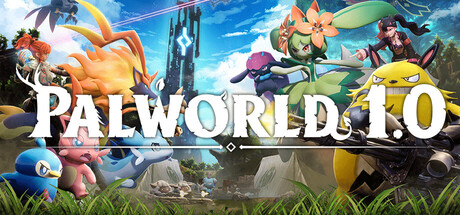
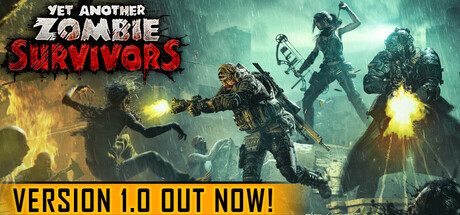
Examples that meet the recommended level or better include Yet Another Zombie Survivors, Big Walk, Forza Horizon 6, Heroes of Might and Magic: Olden Era, Librarian: Tidy Up the Arcane Library!, Far Far West, Super Battle Golf and Mewgenics. Titles that only reach the minimum include Big Ambitions, Scrap Mechanic, Palworld and Paralives. Newer demanding games such as Starfield, DOOM: The Dark Ages and METAL GEAR SOLID Δ: SNAKE EATER fall below the minimum.
For resolution, 1080p is the sensible target for this card. Pushing toward 1440p means lowering quality settings and leaning on upscaling, and results vary by game, so 1080p is the better baseline.
Compared with similar hardware
In tier terms, it sits close to the AMD Radeon RX Vega 56 and the Intel Arc A580, which are all in the same entry gaming band. Among these, the choice often comes down to price, cooling and driver support. The NVIDIA GeForce RTX 2060 6GB sits one step higher and generally has an edge in supported features and compatibility with newer games.
Below it, the AMD Radeon RX 5600 XT and the NVIDIA GeForce GTX 1070 Ti sit slightly lower, and the NVIDIA GeForce RTX 3050 8GB lower still. On tier alone this card is clearly ahead of those options, but whether it is worth buying depends on the actual price.
In short, it is a middle-of-the-road choice in its class: its strengths are ample video memory, and its weaknesses are the lack of ray tracing and DLSS.
Buying new or used
If you are considering a new card, stock may still exist, but Pascal is an aging generation, so compare it with newer cards at the same price first. Check that your power supply has enough wattage and the right connectors, and confirm the card's length fits your case.
If you are considering a used card, the main concern is whether it was used for cryptocurrency mining. Long periods at full load wear fans, thermal paste and power components. Check that the fans run smoothly, look for obvious signs of heavy use, and ask the seller for warranty or purchase records where possible.
Also ask whether the seller allows a test before purchase, and check the warranty period and whether it transfers, to reduce your risk.
Upgrade advice
If your main problem is that games run poorly and you often miss the recommended requirements, an upgrade is a reasonable step. If only a few specific games are demanding, it is worth lowering quality settings first before replacing the card.
If you do upgrade, look at the AMD Radeon RX 6600 XT, the Intel Arc B570 or the NVIDIA GeForce RTX 3060 12GB, all of which sit clearly higher than this card. The RTX 3060 12GB in particular has more video memory, which gives more headroom for future games.
When upgrading, also check whether your processor and memory keep up. A weak CPU or too little RAM will limit what a new card can deliver, so consider the whole system's balance.