NVIDIA GeForce GTX 1070 Ti Buyer's Guide
Positioning and generation
The NVIDIA GeForce GTX 1070 Ti is a desktop graphics card from the Pascal generation. In our ranking it sits in the Entry Gaming tier band. It is a step above the standard GTX 1070, but by today's standards it is an older entry-to-midrange option.
Its role is clear. It suits people who want to run a good share of games that are still sold, comfortably meeting official recommended requirements in many of them, rather than chasing the latest large titles at maximum settings. If you already own one, it still handles a reasonable library. If you are buying new, weigh it against its alternatives and your overall budget.
In our tier ranking it sits below the AMD Radeon RX 5600 XT, AMD Radeon RX Vega 56 and Intel Arc A580, and above the NVIDIA GeForce RTX 3050 8GB and GTX 1660 Ti.
Key specs explained
This card has 8 GB of GDDR5 video memory on a 256-bit memory bus. Eight gigabytes is enough for most games at 1080p, but in newer large titles with high-quality textures and effects, capacity can become a limit. The wide 256-bit bus was generous for its time and helps memory bandwidth, although GDDR5 itself is an older memory technology.
On features, the card does not support ray tracing and has no DLSS. It does support FSR, AMD's upscaling technology, which renders the game at a lower internal resolution and scales the image up to your display, trading some sharpness for smoother play. FSR is a general software method and does not depend on dedicated hardware units, so this card can use it.
In short, the specs suit players who do not need ray tracing and are aiming at 1080p. If ray tracing or DLSS is a priority, this card is not the right choice.
Suitable games and resolutions
Based on our calculation against official requirements, this card can be assessed in 419 of the 439 catalogue games that have official requirement data. It clears the recommended tier in 220 of those games and meets the recommended requirement in 78 more, while 112 games are only met at the minimum level and 9 fall below the minimum. These counts reflect comparison with official requirements, not measured play experience.
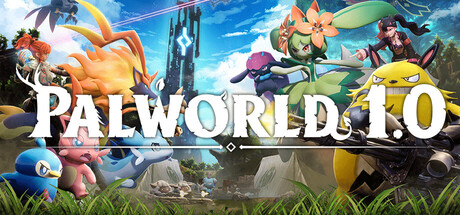
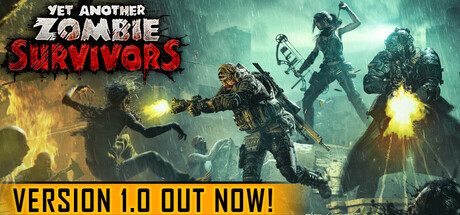
Examples that clear the recommended level include Yet Another Zombie Survivors, Big Walk, Heroes of Might and Magic: Olden Era, Super Battle Golf, Mewgenics, Rhythm Doctor, Farthest Frontier and Digimon Story Time Stranger, mostly lighter-demand titles. Games that only meet the minimum include Big Ambitions, Scrap Mechanic, DragonSword : Awakening, Palworld, Paralives and LEGO® Batman™: Legacy of the Dark Knight, which will need reduced graphics settings for a comfortable experience. Those that fall below the minimum include Gothic 1 Remake, Windrose, VEIN, METAL GEAR SOLID Δ: SNAKE EATER, DOOM: The Dark Ages and Indiana Jones and the Great Circle.
For resolution, 1080p is the sensible target. Trying 1440p means expecting to make more compromises in newer demanding games. 4K is beyond what this card is designed for.
Compared with similar hardware
One tier up sit the AMD Radeon RX 5600 XT, AMD Radeon RX Vega 56 and Intel Arc A580. These generally cover more games against official requirements. The RX 5600 XT and RX Vega 56 are older generations, while the Arc A580 is newer, and each differs in feature support and software ecosystem.
One tier down sit the NVIDIA GeForce RTX 3050 8GB, GTX 1660 Ti and GTX 1660 Super. The GTX 1660 Ti and RTX 3050 8GB are close in standing, while the GTX 1660 Super is a little weaker. If your budget is near these cards, decide which features matter most to you, such as whether you need a specific RTX technology.
Overall, this card is a middle-ground choice for players who do not need top performance but want more than the lowest-end products.
Buying new or used
If you are buying new, check that your power supply has enough wattage and the right connectors, and measure your case to confirm the card's length and cooler height will fit. Cooling design also matters, since it affects noise and temperatures under long, heavy loads.
If buying used, the main concern is how the card was run. Cards that were used for mining may have spent long periods at full load, so fans, thermal paste and capacitors may show more wear. Check that the fans spin smoothly and that the card is not heavily dusty or damaged. Ask the seller for photos or details of its use, and confirm whether any warranty or proof of purchase remains.
Whether new or used, make sure the rest of your system matches the card, especially the processor and memory, so a single component does not hold back the whole build.
Upgrade advice
If you own this card and find it struggling with newer games, upgrading is usually a sensible move. Targets to consider include the AMD Radeon RX 6600, NVIDIA GeForce RTX 3060 8GB and AMD Radeon RX 5700 XT. In our ranking each sits clearly above the current card, and each is of the same or a newer generation.
Balance matters when upgrading. If your processor or memory is still on an older level, a faster graphics card may deliver limited gains. Check that your processor and memory can keep up with a new card, and plan for them at the same time if needed.
If your main goal is 1080p and you are not demanding high graphics settings, this card may still serve for a while, so there is no need to rush a replacement.